

A lot of founders treat branding like a launch-week task. Get the product working, close a few pilot customers, then slap a logo on it before the demo day deck goes out. It’s an understandable order of operations. The product is the thing that has to work, and branding can feel like decoration by comparison.
Then the company raises a Series A, and the brand that felt fine at ten customers suddenly doesn’t hold up in a board deck, a job posting, or a category comparison chart a competitor built about you. So the company rebrands, usually at the worst possible time, with a legal team, a new investor, and a growing customer base all watching.
That rebrand is avoidable. Not by building a full brand system before you’ve shipped a line of code, but by making a handful of foundational decisions early enough that they don’t have to be undone later.

Branding before launch isn’t just about logos.
The instinct to skip early branding usually comes from a narrow definition of what branding is. Founders picture a logo, a color palette, maybe a tagline, nice-to-haves that can wait until there’s revenue to justify the spend.
The work that actually matters pre-launch is different. It’s the strategic layer underneath all of that: who the company is for, what problem it solves that others don’t, and how it wants to be understood by investors, customers, and future employees. None of that requires a design budget. It requires clear thinking, written down, before the company scales past the point where everyone just intuitively agrees on it.
Your logo is on the surface. It can be reworked. Positioning that’s baked into your pitch deck, your first hundred customer conversations, and your first three hires runs deeper, and it’s far harder to unwind.
What’s actually at stake in a Series A rebrand:
Plenty of great companies outgrow their first brand as the product evolves, the market shifts, or the team learns things about their customer they didn’t know on day one. But there’s a real difference between choosing to evolve a brand on your own timeline and being pushed into one at the exact moment you can least afford the distraction. Here’s what’s easier to protect when the foundational thinking happens early.
Investor confidence.
A brand that already reflects a clear point of view lets a Series A conversation stay focused on growth, not on re-explaining who the company is and why. That’s a much stronger position to raise from.
Customer trust, right when retention matters most.
Early customers bought into a name and a promise. A brand that holds steady through a fundraiser keeps that relationship simple, which frees up energy for renewals and referrals instead of reintroductions.
Momentum in hiring.
A clear, consistent brand gives strong candidates something to buy into quickly. It’s one less thing standing between a great candidate and a yes.
Founder attention.
The strategic groundwork, done early and well, means that when growth does call for new visuals or a bigger brand system, that work can happen without pulling focus from the sales pipeline or the product roadmap.
None of this means a rebrand can’t work. Plenty of the strongest brands we’ve helped build came out of exactly that process. It’s simply easier and cheaper to do this thinking once, early, than to do it twice under pressure.
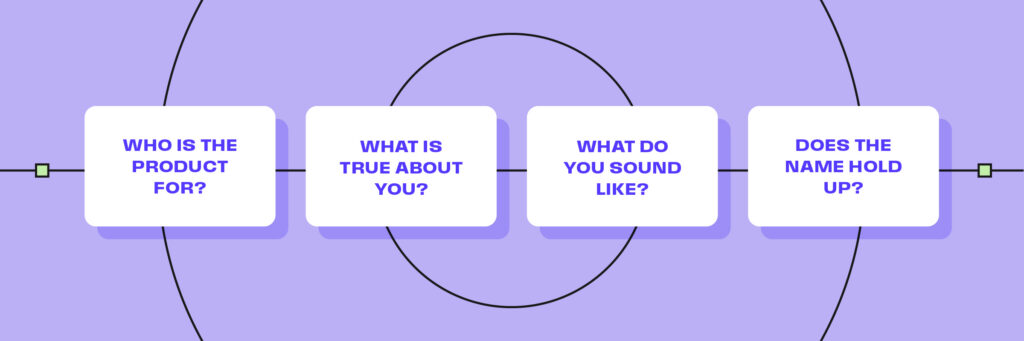
The foundation worth building before you ship:
None of this requires a rebrand-proof brand system before your product exists. It requires answering a short list of questions honestly, before you’re too far in to answer them without cost:
- Who is this for, specifically? Not “everyone who has this problem,” but the actual first buyer.
- What’s the one thing that’s true about you that isn’t true about the alternatives? The real differentiator, not the aspirational one.
- What does the company sound like? The tone and vocabulary that will show up in sales calls, job posts, and investor updates for years.
- Does the name hold up? Will it still make sense if the product line expands, the market shifts, or you raise funds from investors who’ll want to search it without a dozen unrelated results in the way?
Answer those with intention, and the visual identity that follows, the logo, the site, and the deck all have something solid to sit on. If you skip them, you’re building on assumptions nobody agreed to out loud.

Coherent from the start costs less than coherent eventually.
The founders who avoid the Series A rebrand don’t always spend the most on branding before launch. They do the strategic work early, keep the visual execution appropriately lean for their stage, and leave themselves a foundation they can build on rather than one they have to replace.
Branding before your product ships is about making the decisions once, on purpose, instead of by accident, and then again under pressure.
If you’re building something ambitious and want to get the foundation right before you scale past the point of easy fixes, we’d love to talk. We work with early-stage founders on exactly this kind of pre-launch identity work. We focus on strategy first, then execution, sized to where you actually are.