

For years, marketing teams have optimized for search engines. We’ve refined keywords, structured metadata, improved load times, and built backlink strategies, all to rank higher in Google. But search is changing. Increasingly, your audience is asking instead of searching.
They’re asking ChatGPT, Google’s AI Overviews, Perplexity, Claude, Gemini, and voice assistants. And they’re getting synthesized answers instead of a list of blue links.
The question marketing leaders need to ask now has changed from “Can we rank?” to: “Can AI read us?” Like it or not, we’re in the era of Answer Engine Optimization (AEO).
What is Answer Engine Optimization (AEO)?
Answer Engine Optimization is the practice of structuring your content, messaging, and digital presence so AI systems can:
- Understand what you do
- Interpret your authority
- Extract accurate information
- Cite or reference your brand in generated answers
SEO was about ranking on a results page; AEO is about being included in the answer itself. That’s a fundamental shift. Now you’re faced with competing for presence in the intelligence layer that sits between your brand and your audience.
Why AEO Matters for Established Brands
If you’re leading marketing at a mid-sized organization, you likely already have:
- A defined brand identity
- A content library
- Domain authority
- Market recognition
But here’s the challenge: AI systems don’t “experience” your brand the way humans do. They don’t feel your design or positioning, and they don’t infer nuance from visuals. They read structure, clarity, consistency, and semantic meaning.
- Campaign playbooks instead of custom builds
- Design systems instead of ad hoc layouts
- Standardized sales templates instead of reinvented decks
- Messaging frameworks aligned to a master narrative
That means:
- A beautifully designed page without a clear structure may be invisible to AI.
- A strong brand voice without explicit positioning may be misinterpreted.
- A robust service offering buried in clever copy may never be surfaced in an AI-generated answer.
Can AI Read Your Design?
Design has always offered a competitive advantage, but now you need to account for how AI perceives your brand.
AI reads:
- Headings
- Structured data
- Contextual signals
- Entity relationships
- Repetition and reinforcement of key themes
If your differentiation lives primarily in visual polish, animation, or brand expression, but not in structured, explicit language, AI may struggle to understand what makes you distinct.
For example:
- Do your service pages clearly state who they’re for?
- Is your positioning defined in text?
- Are your case studies structured around problems, solutions, and outcomes?
- Is your expertise reinforced across multiple pages in consistent language?
If not, AI may generalize you into a broader category, diluting your brand in generated answers.
The Strategic Shift: From Keywords to Entities
We know traditional SEO focused heavily on keywords, but AEO focuses more on entities and relationships. An entity is a clearly defined concept (your company, your product, your category, your leadership team, your methodology), and AI models build knowledge by connecting entities.
To strengthen your presence:
- Clearly define your company category (not just “what we do,” but “what we are”).
- Reiterate your specialization consistently across your site.
- Associate your brand with specific problems and industries.
- Publish content that reinforces topical authority, not just isolated blog posts.
Shift from asking: “What keywords should we rank for?” to “What concepts do we want to be known for?”
Practical Steps to Improve AEO
Instead of panicking and trying to overhaul your entire digital presence overnight, be intentional about the shift. Here are practical steps marketing leaders can implement:

1. Clarify and Repeat Your Positioning
Your Home page, About page, and Service pages should clearly and consistently answer:
- Who are we for?
- What do we specialize in?
- What outcomes do we drive?
- What makes our approach different?
Avoid overly abstract language. AI rewards clarity (and humans often do too!).
2. Structure Content for Extraction
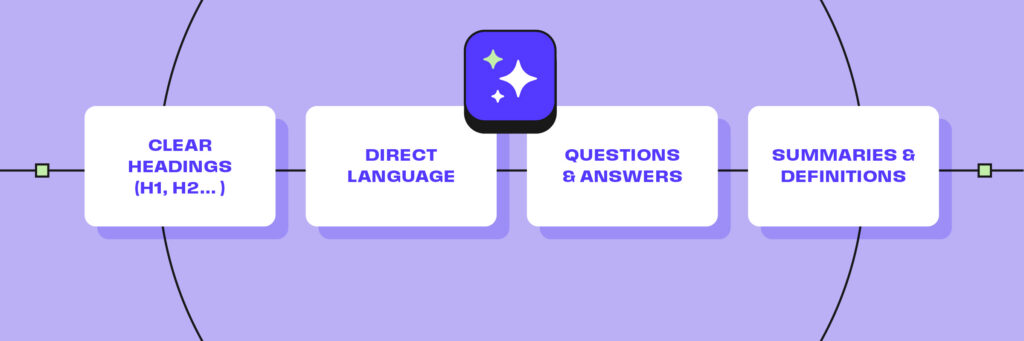
AI systems favor content that is:
- Well-organized with clear headings (H1, H2, H3)
- Written in concise, direct language
- Structured around questions and answers
- Supported by summaries and definitions
Consider:
- Adding FAQ sections to key pages.
- Using clear subheadings that mirror real customer questions.
- Including concise definitions of your services and methodologies.
Make it easy for AI to quote you accurately.
3. Strengthen Topical Authority
For example, if your company wants to be associated with “enterprise cybersecurity compliance,” publishing one blog post isn’t going to be enough.
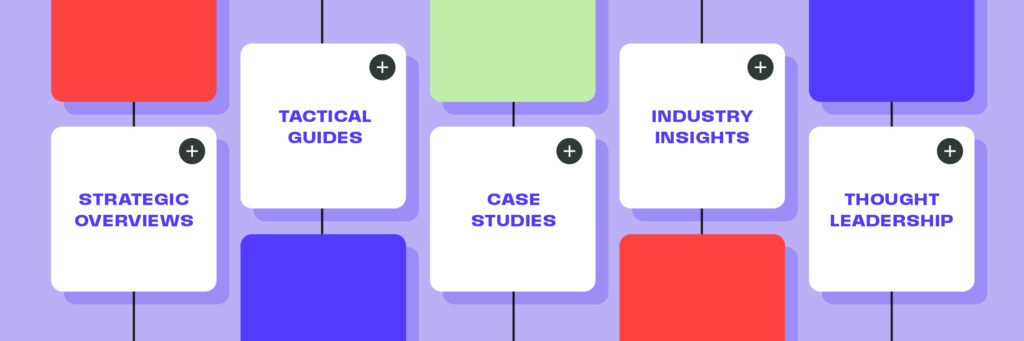
Build clusters of related content:
- Strategic overviews
- Tactical guides
- Case studies
- Industry insights
- Thought leadership
AEO rewards depth and consistency over volume.
4. Align Brand and Language
Many mid-sized organizations evolve faster than their websites. Your messaging may live in sales decks, while your differentiation may live in leadership conversations. And your true expertise may live in your delivery teams. If it’s not clearly articulated online, then AI is not going to see it.
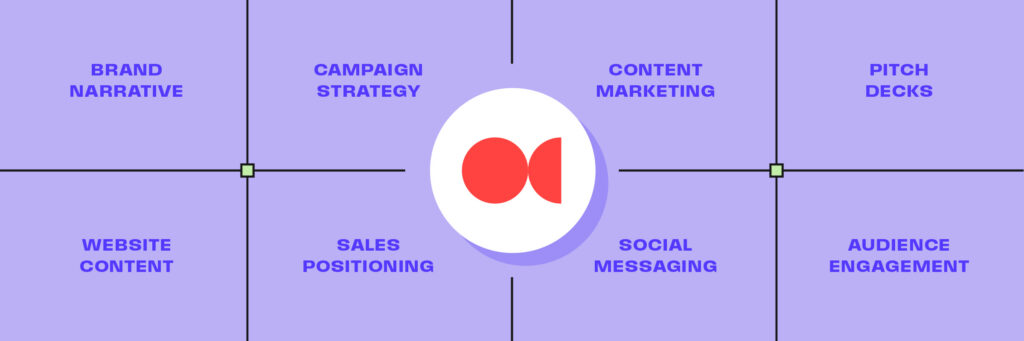
Ensure your sales positioning, brand strategy, website copy, and content marketing are aligned around the same core narrative and are updated as needed.

5. Monitor AI Visibility
AEO is still emerging, but you can begin testing:
- Ask AI tools about your category.
- See which brands are mentioned.
- Analyze how competitors are described.
- Identify gaps in how your own brand is represented, or omitted.
Treat AI platforms as a new distribution channel that requires strategic oversight.
AEO is Not Just a Technical Exercise
It’s tempting to treat AEO as a schema markup project or a metadata refresh. But fundamentally, it’s a brand clarity exercise. AI rewards brands that:
- Clearly articulate their expertise
- Demonstrate consistent authority
- Connect ideas across their ecosystem
- Communicate in structured, unambiguous ways
As AI becomes the first touchpoint for research and vendor discovery, the brands that win will be the most legible. So, although your website may be beautifully designed, your messaging may resonate with your customers, and your SEO may be strong, you have to evaluate if someone asked an AI assistant about your category tomorrow, would your brand be part of the answer?
If you want to make sure AI understands and recommends your brand, let’s talk. Contact The Grove Creative to explore how Answer Engine Optimization can strengthen your visibility, authority, and impact in the AI-driven search landscape.