

Brands Evolve. Your first brand may not be your final brand; it’s your best first guess.
In technology and business, that might be a hard truth to accept. You spend months defining the logo, messaging, colors, and voice only to discover the market doesn’t quite “get it.” Maybe your visuals feel off. Your tagline falls flat. Your value proposition sounds like everyone else’s.
But what if your brand didn’t have to be perfect out of the gate? What if you could build it alongside your customers, using their real-world feedback to refine your message, tone, and visuals over time?That’s the power of iterative brand testing: a smarter, customer-driven approach to building a brand that evolves in step with your audience, not behind them.
Why Static Brands Struggle
Most companies still treat branding like a one-and-done event. Launch big, invest like crazy, and lock in decisions for years. But consumer preferences shift overnight, and new competitors emerge weekly. Static brands can’t keep up.
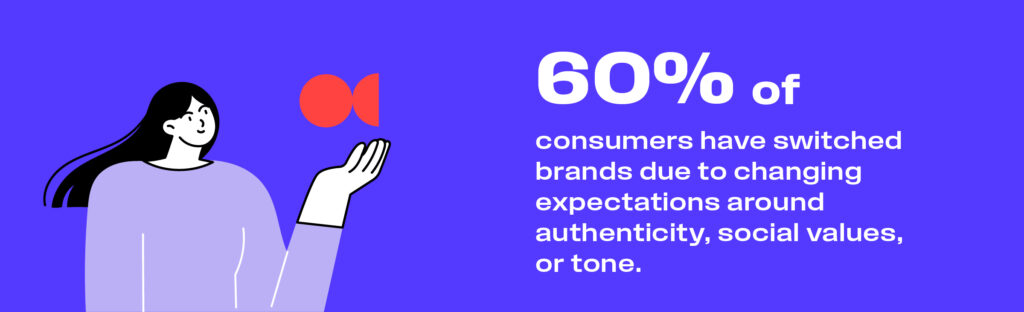
According to one McKinsey report, more than 60% of consumers have switched brands due to changing expectations around authenticity, social values, or tone. Brands that cling to outdated messaging or aesthetics lose relevance quickly.
Even household names aren’t immune. Remember Gap’s infamous 2010 logo rebrand that was pulled after six days? Or Cracker Barrel’s most recent attempt at a brand refresh that fell flat with their customer base? These are prime examples of what happens when a brand makes big moves without iterative testing and customer input.
What is Iterative Brand Testing?
Iterative brand testing is the process of continuously refining your brand based on real customer feedback and performance data. Instead of guessing what will resonate, you test small hypotheses: your tagline, tone of voice, website copy, or even visual identity, and let audience response guide your next move.
It’s the difference between a static brand strategy and a living, breathing brand ecosystem.
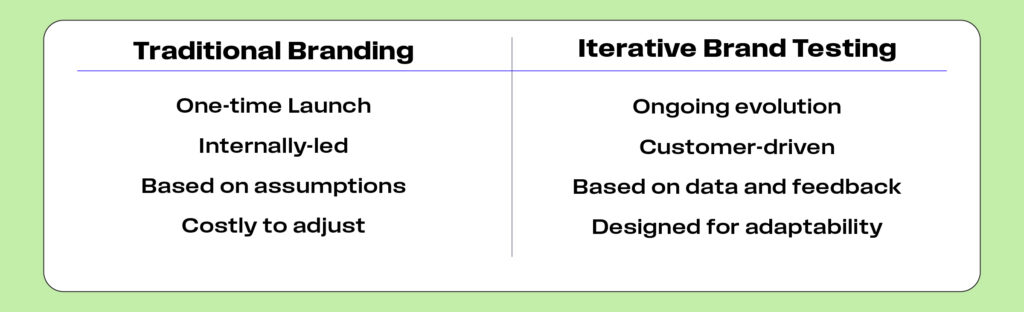
This approach doesn’t mean you’re indecisive or reactive. It also doesn’t mean you need to be switching things up constantly, as that would be confusing to your consumers. What it means is that you’re listening and using structured feedback loops to make smarter, evidence-backed brand decisions.
Building Feedback Loops into Your Brand Process
So how do you make iterative brand testing a habit instead of a one-off exercise? It starts with intentional feedback loops.
1. Identify What to Test
Focus on high-impact brand elements:
- Messaging clarity (does your positioning make sense to customers?)
- Tone of voice (do you sound approachable, credible, or distant?)
- Visual consistency (do your colors and design feel aligned with your audience’s taste?)
- Value proposition (is it clear why your product is different and what it offers?)
2. Choose the Right Testing Methods
Different insights require different methods:
- Surveys and polls: Use a simple form/polling tool (i.e., Typeform and Google Forms are good options) to test perceptions of your brand.
- A/B testing: Run small ad or landing page variations to see which headlines or visuals perform better.
- Customer interviews: Dive deeper into what customers feel when they encounter your brand.
- Message comprehension tests: Ask customers to summarize your value proposition in their own words.

3. Blend Quantitative and Qualitative Feedback
Analytics can tell you what’s happening (click-through rates, time on page), but only conversations reveal why. The best brand testing strategies combine both.
Turning Feedback into Action: The Iteration Cycle
Gathering feedback is only half the battle. Applying it is where the magic happens. Use a simple four-step loop to bring structure to your iterative brand testing process:
- Test: Launch a small variation: a new homepage hero, an updated tagline, or a refreshed email design.
- Measure: Track how audiences respond, measuring engagement, conversions, or sentiment.
- Refine: Incorporate insights into your brand system and messaging playbook.
- Repeat: Keep testing over time to strengthen your brand based on consistent learning.
One small iteration could result in a major impact. That’s the compounding power of continuous brand improvement.

Your Brand is a Living System
Iterative brand testing turns branding from a static event into a continuous, insight-driven journey. It builds resilience, keeps you connected to your market, and ensures your story grows alongside your customers.
So start small. Run one test to start (a tagline survey, a homepage headline A/B, or a visual concept poll), see what you learn, refine, and repeat.
If you’re ready to move beyond guesswork and start building a customer-driven brand, our team can help. Let’s build your next brand iteration together!